


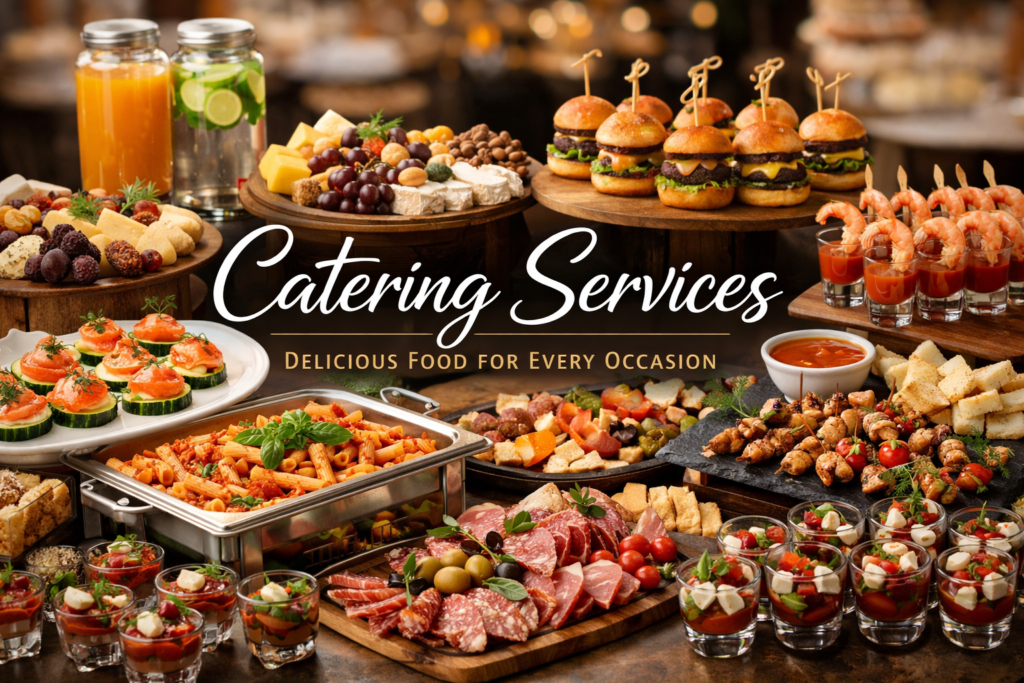
When planning an event, food is more than just a necessity—it’s the heart of the experience. Whether it’s a wedding, corporate gathering, birthday celebration, or private dinner party, catering services play a crucial role in creating memorable moments. Professional catering goes beyond preparing meals; it delivers hospitality, creativity, and seamless service that allows hosts to focus on enjoying their special occasion.
In this blog, we’ll explore what catering services offer, the different types available, and how to choose the right caterer for your event.
What Are Catering Services?
Catering services involve the preparation, delivery, and presentation of food and beverages for events of all sizes. Many catering companies also provide additional services such as event setup, décor coordination, serving staff, bartending, and post-event cleanup.
Professional caterers work closely with clients to design customized menus that suit the theme, dietary requirements, and budget of the event. From elegant plated dinners to interactive food stations and buffet spreads, catering services are tailored to enhance the guest experience.
Types of Catering Services
Understanding the different types of catering can help you select the right option for your event.
1. Corporate Catering
Corporate catering is ideal for business meetings, conferences, product launches, and company celebrations. It often includes breakfast spreads, boxed lunches, buffet-style meals, or formal sit-down dinners. Professional presentation and punctual service are key in corporate settings, where timing and professionalism matter most.
2. Wedding Catering
Wedding catering is one of the most detailed and customized services. Couples often choose multi-course plated dinners, buffet options, or cocktail-style receptions with hors d’oeuvres. Wedding caterers typically assist with menu tasting sessions, beverage pairings, and coordination with event planners.
3. Social Event Catering
Birthdays, anniversaries, baby showers, and family reunions fall under social event catering. These events allow for creative menus, themed food stations, and interactive experiences such as live cooking counters or dessert bars.
4. Private Catering
Private catering is perfect for intimate gatherings or luxury home dining experiences. Some caterers even offer personal chef services, where gourmet meals are prepared fresh at the venue.
Key Benefits of Hiring Professional Catering Services
1. Stress-Free Planning
Organizing an event involves countless details. Hiring a caterer ensures food preparation, serving, and cleanup are handled professionally, reducing stress for the host.
2. High-Quality Food and Presentation
Professional caterers use fresh ingredients and culinary expertise to create dishes that are both delicious and visually appealing. Presentation plays a major role in elevating the dining experience.
3. Customizable Menus
Catering services can adapt to dietary needs such as vegetarian, vegan, gluten-free, or allergen-specific requirements. This ensures all guests feel included and accommodated.
4. Professional Service Staff
Experienced servers, bartenders, and coordinators ensure smooth execution throughout the event. Their training guarantees efficiency, politeness, and attention to detail.
5. Time and Cost Efficiency
While some may assume catering is expensive, it often proves cost-effective when considering the time, equipment, and effort required to cook for large groups.
How to Choose the Right Catering Service
Selecting the right caterer can significantly impact your event’s success. Here are some essential factors to consider:
1. Experience and Reputation
Look for caterers with proven experience in handling events similar to yours. Read online reviews, ask for references, and review their portfolio.
2. Menu Variety and Flexibility
A good caterer should offer diverse menu options and be willing to customize dishes according to your preferences and cultural traditions.
3. Tasting Session
Always request a tasting session before finalizing your booking. This helps you evaluate food quality, flavor, and presentation.
4. Budget Transparency
Ensure the caterer provides a clear breakdown of costs, including service charges, staff fees, rentals, and taxes. Avoid hidden costs by discussing all details upfront.
5. Licensing and Hygiene Standards
Verify that the catering service follows proper food safety regulations and holds the necessary licenses. Cleanliness and hygiene are non-negotiable when it comes to food service.
Trends in Modern Catering Services
The catering industry continues to evolve with changing customer preferences. Some popular trends include:
- Farm-to-table menus featuring locally sourced ingredients
- Interactive food stations such as live pasta counters or taco bars
- Sustainable catering practices with eco-friendly packaging
- Fusion cuisines blending global flavors
- Health-conscious options with organic and low-calorie dishes
These trends not only enhance the guest experience but also reflect modern values and lifestyles.
Why Catering Services Are Worth the Investment
Food has the power to bring people together and create lasting impressions. A well-catered event leaves guests talking about the flavors, presentation, and overall experience long after the event ends. Professional catering ensures consistency, quality, and a level of sophistication that is difficult to achieve independently.
Whether hosting a grand wedding or an intimate celebration, partnering with the right catering service transforms your vision into reality. From planning and preparation to presentation and cleanup, caterers handle every culinary detail with expertise and care.
Final Thoughts
Catering services are more than just food providers—they are experience creators. By choosing a reputable and experienced caterer, you can ensure your event runs smoothly and leaves a lasting impression on your guests.
When planning your next event, consider investing in professional catering services to elevate the occasion. After all, great food isn’t just served—it’s remembered

A WordPress Commenter
Hi, this is a comment.
To get started with moderating, editing, and deleting comments, please visit the Comments screen in the dashboard.
Commenter avatars come from Gravatar.